
Great Decisions Returns Monthly March-September 2025
2025 Topics, Speakers, and Dates
For many years, UMSL Global and the World Affairs Council of St. Louis have teamed up to participate in the Foreign Policy Association’s Great Decisions program, America’s largest discussion program on world affairs. In this program, experts with the Foreign Policy Association choose a number of discussion topics related to the most critical global issues facing America. We invite subject matter experts in those topics to share their insights and opinions with us, which, in turn, engages our community in conversations about foreign policy issues facing the United States and the world.
Trump 2.0: US Policy Shifts Amid a Changing Middle East Landscape: August 2025

Nearly seven months into the second Trump administration, the Middle East has featured more prominently in overall U.S. foreign policy. The start of this term has been marked by a high operations tempo for the United States and included President Trump’s Gulf trip; a major policy shift to lift sanctions on Syria and meet with Syria’s de facto leader, Ahmed Al-Sharaa; U.S. military strikes against Iran’s nuclear sites along with U.S. support for a 12-day Israeli military campaign targeting Iran’s nuclear program, military leadership, and infrastructure; and diplomacy in the region led by prominent Trump envoys Steve Witkoff and Tom Barrack.
The impact of these major actions by the United States in the Middle East remains mixed. Close U.S. partners in the Middle East have seen new opportunities to deepen strategic, economic, energy, technological, and military ties with the United States. However, the impact of Trump’s tariffs and broader trade war may ultimately undercut these openings to strengthen bilateral ties and incentivize regional partners to diversify their global economic relationships. Iran, Israel-Palestine, and the Houthis in Yemen remain the three major unresolved variables in the Middle East equation.
This presentation will assess whether Trump 2.0’s overall foreign policy approach—characterized by transactional diplomacy, selective military engagement, and attempts to use America’s economic power to gain global leverage—is likely to produce a more durable and sustainable security environment in the Middle East, amid a rapidly evolving regional landscape.
Brian Katulis is a senior fellow at the Middle East Institute, specializing in US foreign policy and national security. He hosts the MEI podcast series Taking the Edge Off the Middle East and authors the column “Making Sense: A Weekly Take on US Foreign Policy.” Katulis draws on decades of experience living and working in the Middle East, where he has forged relationships of trust and confidence across the region with top leaders in government, the private sector, media, national security, and thought leaders from a wide variety of international organizations. As a foreign policy strategist and senior fellow, Katulis has produced influential studies that have shaped key regional policy debates and provided expert testimony to congressional committees on his findings. He holds a Master in Public Affairs from Princeton University’s School of Public and International Affairs and a BA in History and Arab and Islamic Studies from Villanova University. He was a Fulbright Scholar in Amman, Jordan from 1994-1995, where he conducted a research project on the peace process between Israel and Jordan.
This webinar is free and open to the public. Registration is required.
Wednesday, August 13th, 2025, 1:00 – 2:00 PM Central Online
U.S. Changing Leadership of the World Economy: July 9th, 2025
How is the United States reshaping its role in the global economy? Following a period of significant economic policy shifts under the Biden administration—including efforts to strengthen domestic industry, invest in advanced technologies, and redefine trade relationships—the second Trump administration brings renewed emphasis on economic nationalism, bilateral trade deals, and strategic competition, particularly with China. What does this mean for U.S. global leadership and the future of international cooperation?
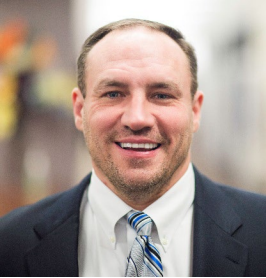
Join us for an in-depth discussion on the evolving dynamics of U.S. economic strategy with Christopher Neely, Senior Policy Advisor at the Federal Reserve Bank of St. Louis. Dr. Neely will examine the challenges and opportunities facing the U.S. as it navigates global leadership, adapts its foreign economic policy, and reconsiders its role in international institutions.
Christopher Neely, Senior Policy Advisor, Federal Reserve Bank of St. Louis. Chris Neely has worked as an economist at the Federal Reserve Bank of St. Louis since receiving his Ph.D. from the University of Iowa in 1993. Neely conducts empirical research in international financial markets. This research has focused on financial volatility, unconventional monetary policy, and market efficiency. He has published in leading academic journals, including the Journal of Economic Literature, the Journal of International Economics and the Journal of Econometrics and is or has been an associate, visiting and/or co-editor at many journals, including the Journal of Money, Credit and Banking and the Journal of Banking and Finance. While working at the Fed, Neely has taught economics and finance as an instructor, adjunct or visiting professor at several universities, including the University of Iowa, Washington University in St. Louis, St. Louis University, the University of Missouri at St. Louis and the University of Hawaii.
This webinar is free and open to the public. Registration is required
Wednesday July 9th, 2025, 1:00- 2:00 PM Central Online
The Future of NATO and European Security: June 4th, 2025
Wednesday June 4th, 2025, 1:00- 2:00 PM Central Online
International Cooperation on Climate Change: May 14th, 2025
The 2015 Paris Agreement established a UN-sponsored framework for negotiations on climate change and global warming. In subsequent COP meetings, experts and political leaders have come together seeking common cause for this growing global crisis. What is the future of these efforts, and what have they yielded? What is the U.S. role in fostering cooperation on climate change? In a divided country, what are the possible futures for American policy leadership?
We will be joined by Beth Martin, a Teaching Professor in Environmental Studies and a scholar in the Center for the Environment at Washington University in St. Louis. She serves as the co-focal point for the Research and Independent Constituency to the United Nations Framework Convention on Climate Change and is regarded as an expert in the UNFCCC process. She provides guidance to researchers worldwide who want to engage with the UNFCCC and herself focuses on transparency and observer engagement in multilateral environmental agreement (MEA) processes with a focus on climate change.
Speaker: Beth Martin
Wednesday May 14th, 2025, 1:00- 2:00 PM Central Online
The Growing Impact of the Indian and Indian-American Community in St. Louis: April 2nd, 2025
The Indian and Indian-American community in St. Louis is experiencing remarkable growth, contributing significantly to the region’s cultural, economic, and social landscape. With a rich history of immigration and a thriving presence in various sectors, including technology, healthcare, education, and business, this community is not only expanding in numbers but also in influence. As St. Louis continues to diversify, the Indian and Indian-American population is playing an increasingly vital role in shaping the city’s identity, fostering cross-cultural exchange, and strengthening the local economy. This talk will explore the vibrant contributions, challenges, and future potential of this dynamic community in the heart of the Midwest.
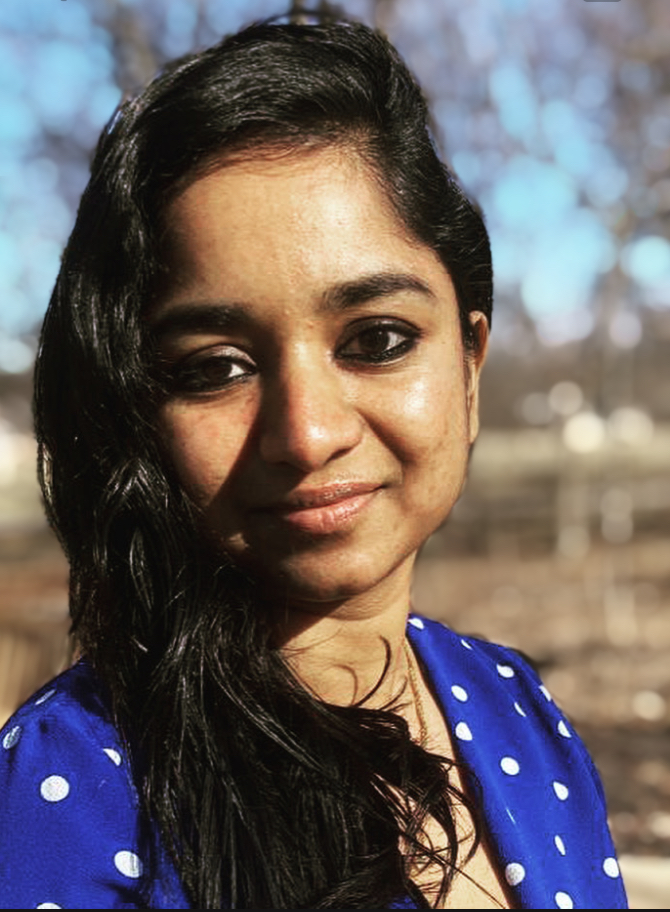
The session will be led by Sneha Chembayil Rajan, PhD, Legislative Liaison in The St. Louis County Executive’s Office and former Indian Outreach Consultant at the Mosaic Project. With a background in both Government and International Affairs, Dr. Rajan brings a unique perspective on how the Indian and Indian-American communities are influencing local policies, fostering cross-cultural dialogue, and driving positive change in St. Louis.
Speaker: Sneha Rajan
Wednesday April 2nd, 2025, 1:00- 2:00 PM Central Online
U.S.-China Relations: March 5th, 2025
 Our first topic of the 2025 Great Decisions Speaker Series will be “Competition, Cold War, or Conflict? Navigating U.S.-China Relations in Tense Times.” Regardless of political affiliation, there is one thing people in Washington D.C. can actually agree on: the United States is in a strategic competition with a rising China that poses a range of economic, political, and military security challenges.
We will be joined by Dr. Haitao Li, Professor, Department Chair, and Founding Director of the Laboratory of Advanced Supply Chain Analytics at the University of Missouri-St. Louis.
Wednesday March 5th, 2025, 1:00- 2:00 PM Central Online
Watch the Recording Here
Sponsors
Great Decisions is sponsored by the Council and UMSL Global

UMSL Global promotes understanding of peoples & cultures through international & multicultural programming, study abroad & exchange opportunities, as well as by providing international experiences for UMSL students and the community. UMSL Global is committed to supporting student, campus, & community learning through a wide range of initiatives designed to internationalize the campus and to ensure that students graduate with the international competence they will need to function in a world that is increasingly globalized.